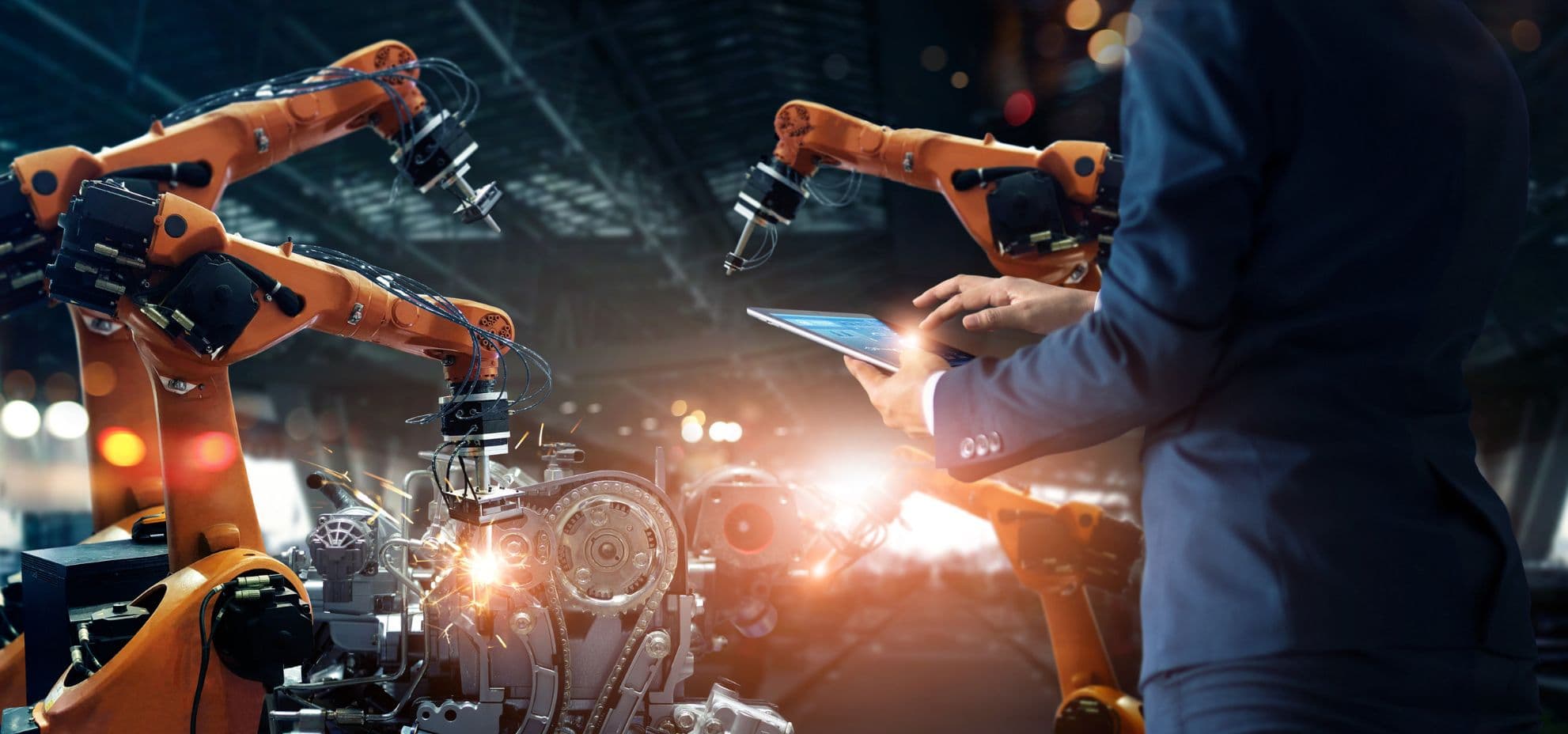

Artificial Intelligence (AI) and Machine Learning (ML) technologies are ushering in a new era in the world of manufacturing. These innovative solutions not only enhance production efficiency but also significantly reduce costs and improve product quality. Below, we explore how the latest AI technologies are being applied in manufacturing processes and how these new solutions help address various challenges.
1. Manufacturing Calibration and Digital Twin
Challenge:
Manual calibration is time-consuming and prone to inaccuracies, leading to inefficiencies and quality issues.
Solution:
AI-powered calibration and digital twin systems use real-time data (machine resonance, tool wear, environmental factors) to optimize processes and simulate manufacturing with precision.
Overall Impact:
- Increased accuracy in simulations and final products
- Efficiency gains of 5–20%
Key Takeaways:
- Real-time calibration boosts reliability
- Digital twins reduce manual interventions and costs
Future Prospects: Even more advanced simulations and predictive models for higher efficiency and quality.
2. Material and Manufacturing Quality Prediction
Challenge:
Late detection of deviations leads to costly defects.
Solution:
AI predicts quality deviations early, identifies causes, and enables timely corrections.
Overall Impact:
- Early error detection improves quality
- Continuous quality optimization ensures reliability
Key Takeaways:
AI-driven quality control ensures consistent standards and enhances brand trust.
Future Prospects: More precise predictive systems will enhance reliability and defect prevention.
3. Proactive Troubleshooting and Manufacturing Optimization
Challenge:
Failures and accidents cause downtime and higher costs. Traditional methods are reactive rather than preventive.
Solution:
AI predicts failures in advance, enabling early intervention and optimizing capacity and material usage.
Overall Impact:
- Reduced downtime and risk
- Efficiency improvements of 10–20%
Key Takeaways:
AI enables proactive error management and significant cost savings.
Future Prospects: Advanced AI will deliver even more accurate alerts and deeper optimization.
4. Supply Chain Management
Challenge:
Demand forecasting and inventory management are difficult under volatile conditions.
Solution:
AI-powered forecasting predicts part requirements accurately and automates supply chain operations.
Overall Impact:
- Reduced shortages and overstocking
- More efficient, flexible supply chains
Key Takeaways:
Automation reduces risks and enhances competitiveness.
Future Prospects: Systems will leverage broader datasets for highly precise supply chain optimization.
5. Product Design and Innovation
Challenge:
Product design and development are lengthy and costly, delaying time-to-market.
Solution:
AI accelerates design processes, analyzes trends, and even generates new ideas for products.
Overall Impact:
- Reduced development time
- Accelerated innovation opportunities
Key Takeaways:
AI helps companies innovate faster, improving competitiveness.
Future Prospects: Future AI will drive adaptive product design aligned with evolving market demands.
Conclusion
AI is transforming the manufacturing sector, enabling companies to operate more efficiently, accurately, and cost-effectively. Through automated systems, real-time analyses, and predictive models, manufacturers will respond faster to market changes, reduce errors, and optimize supply chains.
AI is no longer just a tool—it’s a strategic advantage for future competitiveness.
Unique solutions and proven results are what your organization deserves.